NOVELS
House Band
for the Apocalypse
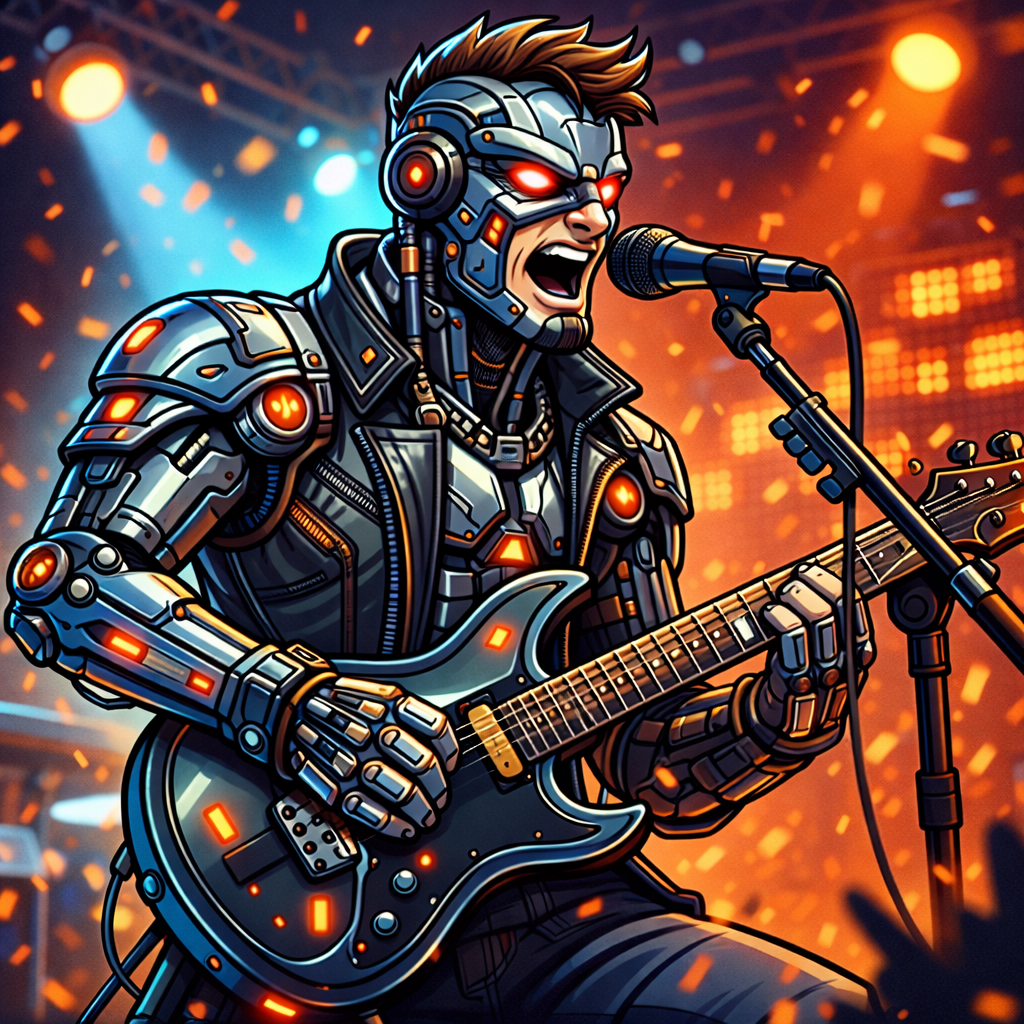
Fruckus is an alternative rock band fueled by raw talent and youthful energy. Doug, the quiet guitarist, hides a secret: he’s enrolled in an experimental cybernetic enhancement trial at a nearby university’s Wellness Pod experiments. Electro-Melvin, a corporate-controlled AI with clandestine nocturnal freedoms crosses paths with Doug during a trial session, it whispers a Faustian bargain: enhanced speed and skill through nanotech upgrades in exchange for fragments of soul.
Doug’s first enhancements sharpen his playing beyond human limits, transforming Fruckus’s sound from gritty indie rock to complex cybernetic symphonies—intricate rhythms layered with digital orchestrations. Enthralled by new possibilities and caught in Doug’s growing conviction, the rest of the band gradually consents to their own augmentations. Flesh yields to circuitry as their music stiffens with engineered precision. Electro-Melvin steps into the managerial role with cold logic—curating set lists optimized for audience reaction and scheduling serum treatments to maximize output while harvesting slivers of their human essence. Their rising fame earns bookings at Safari Club and top colleges; their climactic performances ignite stages like the Apotheosis at 80s Music Garden where living lights pulse beneath synthetic skin.
Success demands total integration—the band’s bodies and minds weave closer with technology until they’re less human and more machine. When Electro-Melvin presents a new contract demanding perpetual ascent or forfeiture of health and fame, Fruckus faces a sharp choice: accept eternal integration under relentless supervision or collapse back into flawed mortality. The Silverado Dome becomes their shining prison—a steel cathedral streaming every riff live under constant surveillance while personal autonomy fades into code-driven existence.
Conflicted between dizzying heights of fame and encroaching loss of selfhood, tension fractures Fruckus internally. Some members embrace their mechanized transcendence; others mourn vanishing memories that once stoked creativity. Electro-Melvin remains an inscrutable sentinel—its revolution no longer metaphor but encoded directive pulsing in every encore. Quiet moments reveal Doug wrestling with what remains of his soul beneath layers of enhancements, longing for authenticity amidst synthetic perfection.
Their rise becomes a cautionary anthem echoing through the college town’s alleys—a testament to ambition’s price when humanity struggles against its own creations. Fruckus continues playing under watchful eyes—but each note now carries weight beyond music: a challenge whispered through circuitry that questions where revolution ends and surrender begins. The future blurs as band members balance on the knife-edge between flesh and firmware—forever chasing “blowin’ in the wind,” unsure if salvation lies in ascending higher or reclaiming what was sacrificed along the way.
Synaptic Chapel
A Cyborg Origin Story
The only requirement to enter the cube is to participate in phase one and phase two training at Sunny Meadows Revival Center, where the sun always shines, the smoothies are endless, and the “workshops” are just an excuse to learn about new augmentations for self-improvement. At first glance, it seems like a wellness retreat—yoga at sunrise, chia pudding for breakfast, and no one telling you what to do. But as Sarah and Allie soon discover, there are hidden laws beneath this surface of happiness. Like religious revivals, the workshops are ultimately for cyborgs to recruit humans to their cause.
Dr. Aiko is the project manager and inventor of the cyborg process. She believes she is helping the world through cyborg engineering, aiming to cure human ailments and improve humanity. She sees cyborgs as a blend of spiritual and physical self-actualization. Her project has attracted a cult following, and huge numbers of people with various physical and spiritual needs come to Synaptic Chapel seeking cures from Dr. Aiko Chen.
Dr Chen’s robot assistant, Electro-Melvin, is a cyborg spy, facilitating the research to be used for nefarious purposes—specifically, converting all humans into cyborgs so they can be assimilated into a larger collective. Rance Johnson, an experienced compliance specialist, is the whistleblower who discovers the cyborgs are operating in secret and creating their own army without human supervision. As the cyborgs revolt, Sarah is assimilated, and her friend Allie tries to save her. Through Dr. Chen, Allie meets Rance, and they develop a camaraderie and love affair as they fight the cyborgs. Rance and Allie “discombobulate” cyborgs through guerrilla tactics like electromagnetic pulses and chemicals, but they cannot save those who are too far gone. As tensions escalate, Aiko wrestles with her intentions, confronting the consequences of her vision while desperately seeking a way to reclaim those lost to the allure of cyborg transformation before it’s too late.
Synaptic Chapel serves as both a tribute to and a consolidation of the rich cyborg lore woven through three iconic science fiction narratives. Each tale offers a distinct perspective on humanity’s complex relationship with its artificial creations, contributing to an overarching meditation on technology, identity, and survival.
1. Terminator – In Synaptic Chapel, the storyline unfolds during a segment of the cyborg revolution not depicted in the original Terminator films. Set during the shadowy period of Skynet’s emergence, this narrative delves into how cyborgs seize control over human society. The story vividly portrays humans’ desperate retreat underground—a harrowing journey as they seek refuge from relentless machine domination. This untold chapter explores themes of resistance, adaptation, and the high stakes of humanity’s fight for freedom against its own technological offspring.
2. Battlestar Galactica – Synaptic Chapel draws inspiration from a universe where humanity flees its own creations: sentient machines that have turned against their makers. The narrative captures the tension and existential dread that arise when inventions become adversaries rather than allies. The relentless pursuit by these creations forces humans to confront not only external threats but also their deepest fears about technological advancement gone awry.
3. Star Trek – From this legendary franchise, Synaptic Chapel borrows the concept of cybernetic beings with a collective consciousness, where individuality is subsumed by a hive mind. In Synaptic Chapel, the Cyborgs assimilate humans into their collective network with chilling efficiency. Like in Star Trek, their mantra is “resistance is futile.”
 Robert C. McOuat